In today’s competitive market, your logo is more than just a symbol, it’s the face of your brand and a vital part of your business identity. However, if your logo infringes on someone else’s copyright, it could lead to legal problems.
With so many logos to date, it’s possible to design one that looks similar to another unintentionally. Ensure your logo complies with copyright laws to avoid copyright infringement and protect your brand’s reputation.
This article will guide you on preventing logo copyright infringement, what to do if it violates someone else’s exclusive rights, and how to ensure your design is original. Continue reading to learn more.
- Creating an original logo is essential to avoid copyright infringement and protect your brand from legal consequences.
- Conducting thorough checks through image searches, trademark databases, and consulting with legal experts ensures your logo is unique and free from potential conflicts.
- Copyright registration of logo and trademark protection provides additional legal advantages and strengthens your brand’s security against infringement.
Table of Contents
Can Logo Copyright Infringement Occur?
Yes, logo copyright infringement can occur. Under 17 U.S.C. § 101, logos can be considered “pictorial, graphic, or sculptural works” if original and creative, making them eligible for copyright protection.
For copyright to apply, a logo must be original, meaning it cannot be copied from another source and must show a level of creativity. Basic geometric shapes or generic symbols usually aren’t protected, but a unique combination of these elements might be.
If your logo resembles an existing creative work, you could face legal consequences, even unintentionally. Copyright infringement is a strict liability offense, so intent doesn’t need to be proven. You could be held liable if your logo is found “substantially similar” to a copyrighted one.
The test for infringement typically includes two steps:
- Access: Did the creator have access to the original work?
- Substantial Similarity: Is the logo significantly similar to the original, even with changes?
In addition to copyright law, logos may also fall under trademark law, governed by the Lanham Act (15 U.S.C. §§ 1051 et seq.), which protects logos as brand identifiers. While copyright infringement involves copying creative elements, trademark infringement focuses on consumer confusion.
In short, if your logo mimics or resembles someone else’s logo, you risk infringing both copyright and trademark protections, so it’s important to create original designs and conduct thorough checks before using a logo.
What Happens if Your Logo Infringes on Existing Copyrights?
If your logo infringes on a copyrighted design, you may face several legal and financial consequences under U.S. copyright law. These penalties include civil and criminal actions depending on the nature of the infringement.
Here are the potential consequences:
Cease and Desist Orders
You may receive a cease and desist letter from the copyright holder demanding that you stop using the infringing logo across all platforms. Ignoring this could lead to further legal action, such as a lawsuit.
Injunctions
If the matter goes to court, the copyright holder can seek an injunction under 17 U.S.C. § 502, forcing you to stop using the logo permanently. This could also mean recalling products that display the logo, which can be expensive.
Financial Penalties
Under 17 U.S.C. § 504, the copyright owner can seek damages. This includes:
- Actual Damages and Profits: Compensation for losses due to the infringement and any profits you gained from it.
- Statutory Damages: The copyright owner may seek statutory damages ranging from $750 to $30,000 per work instead of actual damages. Willful infringement can increase this up to $150,000.
Rebranding Costs
If infringement is found, you may need to rebrand, create a new logo, and update all materials. This can be costly, especially for well-established brands.
Legal Fees
Under 17 U.S.C. § 505, the court may require you to pay both your and the copyright holder’s legal fees, adding to your financial burden.
Damage to Reputation
A public lawsuit can harm your brand’s image, causing customers to lose trust and negatively impacting your long-term success.
Criminal Penalties
In severe cases of willful infringement, criminal charges under 17 U.S.C. § 506 can result in fines or imprisonment, particularly for large-scale, intentional violations.
How to Avoid Logo Copyright Infringement?
Avoiding infringement of a copyrighted logo is essential for protecting your business and ensuring your brand’s identity is unique. Here are some best practices to follow:
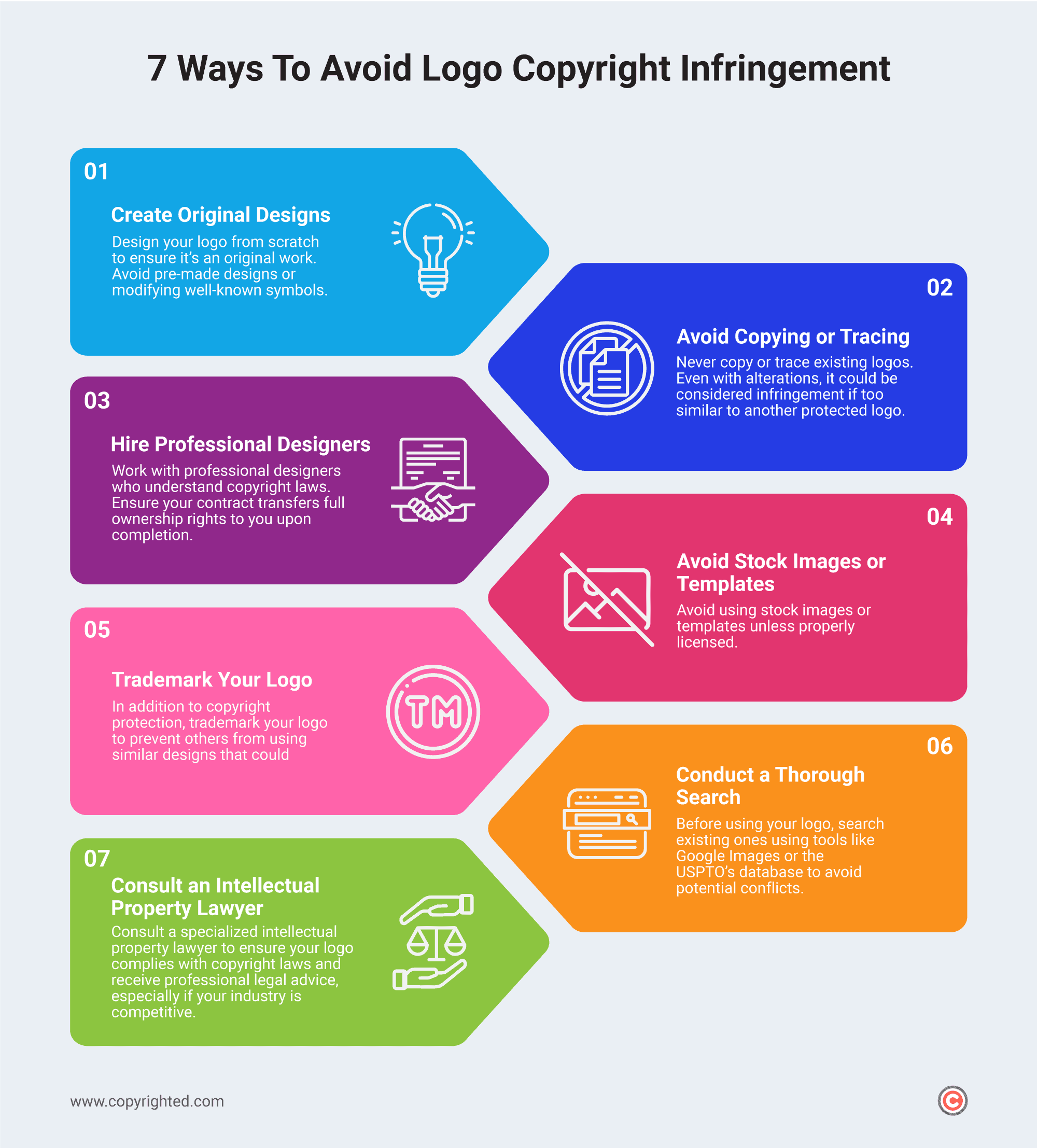
Create Original Designs
Designing an original logo is the best way to avoid copyright issues since copyright law protects unique creations. Modifying a well-known symbol could still be considered an infringement, so avoid using pre-made designs or copying elements from other logos.
Focus on building a completely new design that qualifies as an original work under 17 U.S.C. § 102.
Avoid Copying or Tracing
Using an existing logo as inspiration might seem harmless, but copying or tracing, even with alterations, can still lead to infringement.
Courts apply the “substantial similarity” test, and if your logo is too similar to a protected one, you could face legal consequences under 17 U.S.C. § 501.
Hire Professional Designers
Working with professional designers who understand copyright laws can help secure your logo’s originality. Make sure that your contract transfers all rights to the logo to you once it’s complete so there are no complications regarding ownership.
Avoid Stock Images or Templates
Using stock images or templates in logos can lead to infringement if not properly licensed. Under 17 U.S.C. § 106, the copyright owner controls reproduction and derivative works, so using these elements without permission could violate their rights.
Always ensure proper licensing if you must use stock images.
Trademark Your Logo
Alongside copyright, trademarking your logo offers additional protection, preventing others from using similar logos in ways that might confuse consumers.
Conduct a Thorough Search
Before using your logo, search for existing logos that might be too similar. Use tools like Google Images and the U.S. Patent and Trademark Office’s (USPTO) database to avoid potential conflicts.
Consult an Intellectual Property Lawyer
Consulting a lawyer specializing in intellectual property rights can help you avoid infringement issues and provide a legal assessment of your logo. This step is especially useful in competitive industries where logos are closely scrutinized.
How to Check if Your Logo is Unique and Original?
Ensuring that your logo is unique and original is an important step to avoid copyright infringement and legal issues. Here’s how to confirm your logo’s originality:
Conduct a Google Image Search
Start by uploading your logo to Google Images to see if similar designs appear. If there are logos that closely resemble yours, you may need to revise your design to avoid infringement.
Use Reverse Image Search Tools
Tools like TinEye or Yandex Images can further help you identify whether your logo is visually similar to others, even from obscure sources. These searches add an extra layer of assurance that your logo isn’t unintentionally copying another.
Search Trademark Databases
Logos can be both copyrighted and trademarked, so it’s important to check for potential trademark conflicts using the USPTO database. Even if your logo is original, it may still infringe on a trademark if it could cause consumer confusion.
Browse Logo Databases and Industry Websites
Explore platforms like LogoLounge, Dribbble, and Behance to ensure your logo doesn’t resemble existing designs, especially within your industry. Avoiding logos that could be confused with competitors’ brands is key to preventing legal issues.
Check Social Media Platforms
Search platforms like Instagram, Facebook, and LinkedIn using relevant keywords to see if similar logos are used. Focus on businesses in your industry or region, as these pose a higher risk of causing consumer confusion.
Consult a Legal Expert
If you’re unsure after conducting these checks, consult an intellectual property lawyer. They can perform a thorough analysis to confirm your logo’s originality and help you avoid potential legal disputes.
Register Your Logo for Copyright and Trademark Protection
Once you confirm your logo is original, register it with the U.S. Copyright Office and the USPTO. This provides formal proof of ownership and strengthens your legal standing, allowing you to pursue statutory damages and attorney’s fees.
Frequently Asked Questions
Can you use elements from other logos in your own design if you make modifications?
No, even with modifications, using elements from other logos can still result in copyright infringement if the designs are substantially similar.
How can you verify if a logo designer is providing a copyright-free design?
Ask for a contract that transfers all rights to you and ensures the designer creates an original design without using pre-existing copyrighted materials.
Can you use stock images or online templates for your logo design without infringing on copyrights?
Only if the stock image or template is properly licensed for commercial use and modification; otherwise, it may lead to infringement.
Is it possible to avoid copyright infringement by changing only the colors or font of a similar logo?
No, merely changing colors or fonts is usually not enough to avoid infringement if the overall design remains substantially similar.
What are the common mistakes that lead to logo copyright infringement?
Common mistakes include copying existing designs, using unlicensed stock images, and failing to conduct thorough copyright and trademark searches before use.