Online content theft is more prevalent than many realize, with individuals frequently copying blogs, reposting videos, or using photos without permission. It can affect your traffic, brand, or earnings.
The Digital Millennium Copyright Act (DMCA) provides a means for you to respond. You can file a DMCA takedown notice.
A DMCA takedown is a legal request to get copyrighted content removed when it has been shared without your permission. It’s a straightforward and effective method to take down stolen content from websites, search engines, or platforms like YouTube and Facebook.
This article explains who can file a DMCA takedown, when to use it, what you need to prepare, and how to send it correctly. If your work was copied, this guide will walk you through the steps to claim your rights and protect your content quickly.
- A DMCA takedown is a legal tool that allows content owners to remove unauthorized use of their work online quickly and effectively.
- Preparing a complete and properly formatted notice is essential to ensure the timely removal of infringing content.
- Monitoring the post-submission period and following up if the content remains online is crucial to enforcing your rights.
Table of Contents
Who Can File a DMCA Takedown Notice?
You can file a DMCA takedown notice if you own the copyright or are authorized to act for the copyright owner. Under 17 U.S. Code § 512, the law allows “a copyright owner or a person authorized to act on the owner’s behalf” to request the removal of infringing content.
The Copyright Owner
If you created the original work, like an article, photo, video, song, or software, you are the copyright owner. You don’t have to register the copyright to file a takedown request, but registering it can be beneficial if legal action becomes necessary.
An Authorized Agent
You can authorize someone to act on your behalf, such as an attorney, digital rights manager, or a trusted team member. Just make sure their authority is clearly stated in the notice.
Companies and Organizations
Businesses can also file takedown requests for content they own, such as product images, brand materials, or digital media. Employees or their legal teams typically handle these matters.
Heirs or Successors
If ownership has been passed down or transferred, the new rights holder can file a notice of ownership with the relevant authorities. They may need to show proof of ownership if the takedown is contested.
When Should You File a DMCA Takedown?
You should file a DMCA takedown when your copyrighted content is used without your permission. The DMCA requires service providers to act on valid takedown notices related to copyright infringement.
Here are common cases where filing a takedown is the right step:
Someone Copied Your Text, Images, or Videos
If your blog posts, product descriptions, photos, or videos appear elsewhere without your permission, you can file a takedown. It includes content posted on websites, social media platforms, forums, or file-sharing sites.
Your Work Was Reposted on YouTube or Streaming Services
Audio or video content uploaded to platforms like YouTube or Spotify by someone else is considered unauthorized distribution. Submitting a DMCA notice can result in the removal of the content and discourage repeat violations.
Someone Shared or Sold Your Digital Products
If your digital products, such as eBooks, online courses, templates, or software, are being distributed or sold without your approval, you can request removal. It’s also a good idea to report the marketplace or hosting site involved.
Your Work Was Used in Ads or Promotions
When a business uses your content, like photos, music, or video clips, in advertising or online promotions without your consent, that’s infringement. You can submit a takedown request to stop unauthorized use.
Stolen Content Appears in Search Engines
Stolen content indexed by search engines like Google can still harm your work’s visibility. If the original site is unresponsive or anonymous, filing a DMCA request with the search engine can help remove the links associated with it.
What You Need Before Filing
Before filing a DMCA takedown notice, gather specific but basic information. Submitting incomplete or incorrect details may result in your request being ignored or rejected.
Here’s what to prepare:
1. Your Contact Information
Please include your full name, mailing address, telephone number, and email address so the service provider can verify your identity and the alleged infringer has an opportunity to respond. Some platforms may hide this information for privacy, but the law still requires you to provide it.
2. A Clear Description of Your Copyrighted Work
Identify the content being infringed. This could be the title of a blog post, the URL of a video, or a screenshot of a design. Be specific so the service provider can identify the original work.
3. The Location of the Infringing Material
Include the exact URL where the stolen content appears, avoiding vague references like “this was found on a blog.” Direct links enable the provider to take action more quickly.
4. A Statement of Good Faith Belief
You need to declare that you believe the content is being used without permission from you, your agent, or under the law.
Example:
“I have a good faith belief that the material identified above is not authorized by the copyright owner, its agent, or the law.”
5. A Statement Made Under Penalty of Perjury
You also need to declare, under penalty of perjury, that the information in your notice is accurate and that you’re authorized to act on behalf of the copyright owner.
Example:
“I swear, under penalty of perjury, that the information in this notice is accurate and that I am the copyright owner or am authorized to act on behalf of the owner.”
6. Your Signature
You must sign the notice. It can be a physical or electronic signature. Typing your full legal name at the end of an email is usually acceptable.
How to File a DMCA Takedown Notice
Filing a DMCA takedown notice is a straightforward process. The steps below follow the legal requirements outlined in Section 512 of the U.S. Copyright Act, which specify what a valid notice must include and how to submit it.
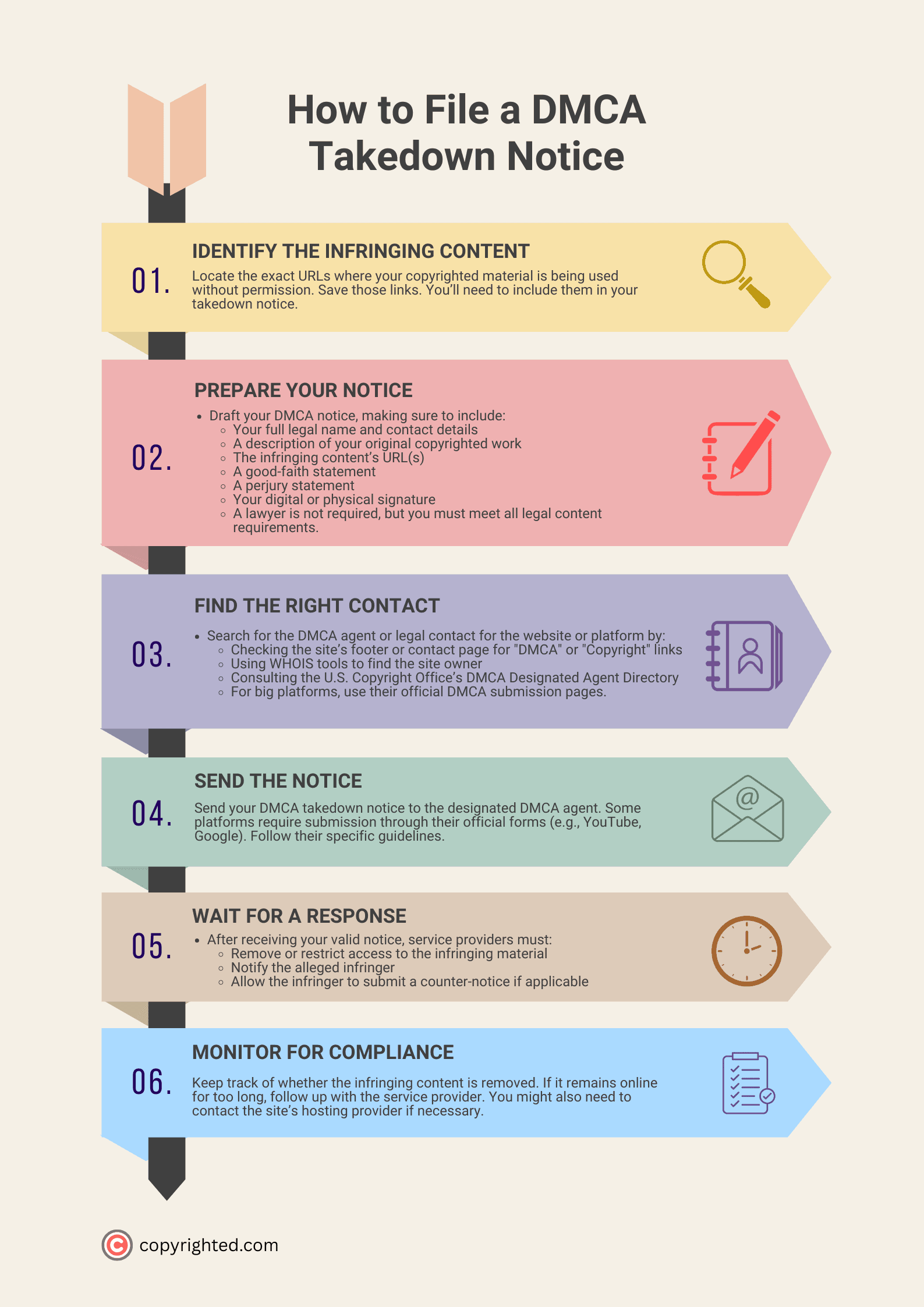
Step 1: Identify the Infringing Content
Find the exact URLs where your content is being used without permission and save those links. You’ll need to include them in your notice.
Step 2: Prepare Your Notice
Draft your DMCA notice with the following information:
- Your full legal name and contact details
- A description of your original copyrighted work
- The location (URL) of the infringing content
- A good-faith statement
- A perjury statement
- Your digital or physical signature
Many people format their notice as a simple email or letter. You don’t need a lawyer to write it, but it must meet the legal content requirements.
Step 3: Find the Right Contact
Look for the DMCA agent or legal contact for the website or platform. Here’s how to find it:
- Check the site’s footer or contact page for “DMCA” or “Copyright” links
- Use WHOIS tools to find site owner info
- For large platforms (like YouTube, Facebook, Google), go to their official DMCA submission page
You can also check the U.S. Copyright Office’s DMCA Designated Agent Directory for registered contacts.
Step 4: Send the Notice
Send a DMCA takedown notice to the site’s designated DMCA agent by email or through an online form if available, as some platforms only accept takedown requests through their official portals. For example, YouTube has a copyright complaint form, and Google has a legal removal request page.
Step 5: Wait for a Response
Once the service provider receives a complete and valid notice, they are required by law to:
- Remove or restrict access to the infringing content
- Notify the alleged infringer
- Allow the infringer to file a counter-notice if they believe the takedown is a mistake.
Step 6: Monitor for Compliance
Check if the content has been removed. If it stays online for too long, follow up with the service provider. You may also consider contacting the website’s host if needed.
Frequently Asked Questions
Do you need a lawyer to file a DMCA takedown?
No, you don’t need a lawyer. You can write and send the notice yourself as long as it includes all the required legal information.
Does your work need to be officially registered to file a DMCA notice?
No, registration isn’t required. However, having a registered copyright makes it easier to prove ownership in the event of legal issues.
How long does it take for a DMCA takedown to be processed?
It usually takes a few days. The exact time depends on how fast the platform responds and whether your notice is complete.
Can you file a DMCA takedown for content on international websites?
Yes, you can. Many international sites and platforms still adhere to DMCA rules, even if they’re based outside the United States.
What if someone submits a false DMCA takedown against you?
You can respond with a counter-notice. If it’s valid, the platform must restore your content unless the sender files a lawsuit.