The internet is now where people work, study, create, and share ideas. However, as more of our daily activities move online, many are unsure about their rights related to digital content, software, and personal data.
This lack of awareness can lead to copyright violations, privacy breaches, and the loss of control over one’s creations.
When people don’t understand digital rights, they might accidentally break the law or give up control without realizing it. This affects not just creators but also businesses and everyday users.
This article explains the main types of digital rights and why they matter. Awareness of your digital rights is essential to staying informed and protected online.
- Understanding digital rights is essential to protecting your creative work, personal data, and online freedoms in today’s internet-driven world.
- Laws and tools like copyright, licensing, DRM, and data protection frameworks empower creators and users to maintain control over digital content.
- Digital rights directly affect how people interact with platforms like YouTube and Netflix, influencing what can be shared, streamed, or modified legally.
Table of Contents
Why Digital Rights Matter
Digital rights matter to everyone who uses the internet, as they protect digital content, ensure privacy, and support freedom of expression in the digital age. These rights empower users to control what they create, share, and use online.
Protecting Creative Work
Creators such as writers, musicians, artists, and developers depend on digital rights to protect their work. Others could copy, sell, or change their content without legal protection without asking.
In the U.S., the Digital Millennium Copyright Act (DMCA) supports these existing rights and gives creators control over how their work is used. Many also turn to Creative Commons licenses to share their work with clear terms.
Safeguarding Personal Data
Websites, apps, and online services collect personal data every day. Digital rights let users know what data is being collected and how it’s used and allow them to request changes or deletion.
In the European Union, the General Data Protection Regulation (GDPR) gives strong protections, including the right to access, fix, or delete personal data.
Ensuring Access to Technology and Information
Internet access is crucial for education, jobs, and free expression. Digital rights include the right to connect and share ideas without unfair restrictions.
Article 19 of the Universal Declaration of Human Rights supports the right to seek and share information through any media. In some countries, net neutrality rules also help keep internet access open and equal for all content.
Main Types of Digital Rights
Digital rights include several legal protections that help people control how their content and personal data are used online. Understanding these rights helps creators, users, and companies avoid legal problems and make smarter decisions.
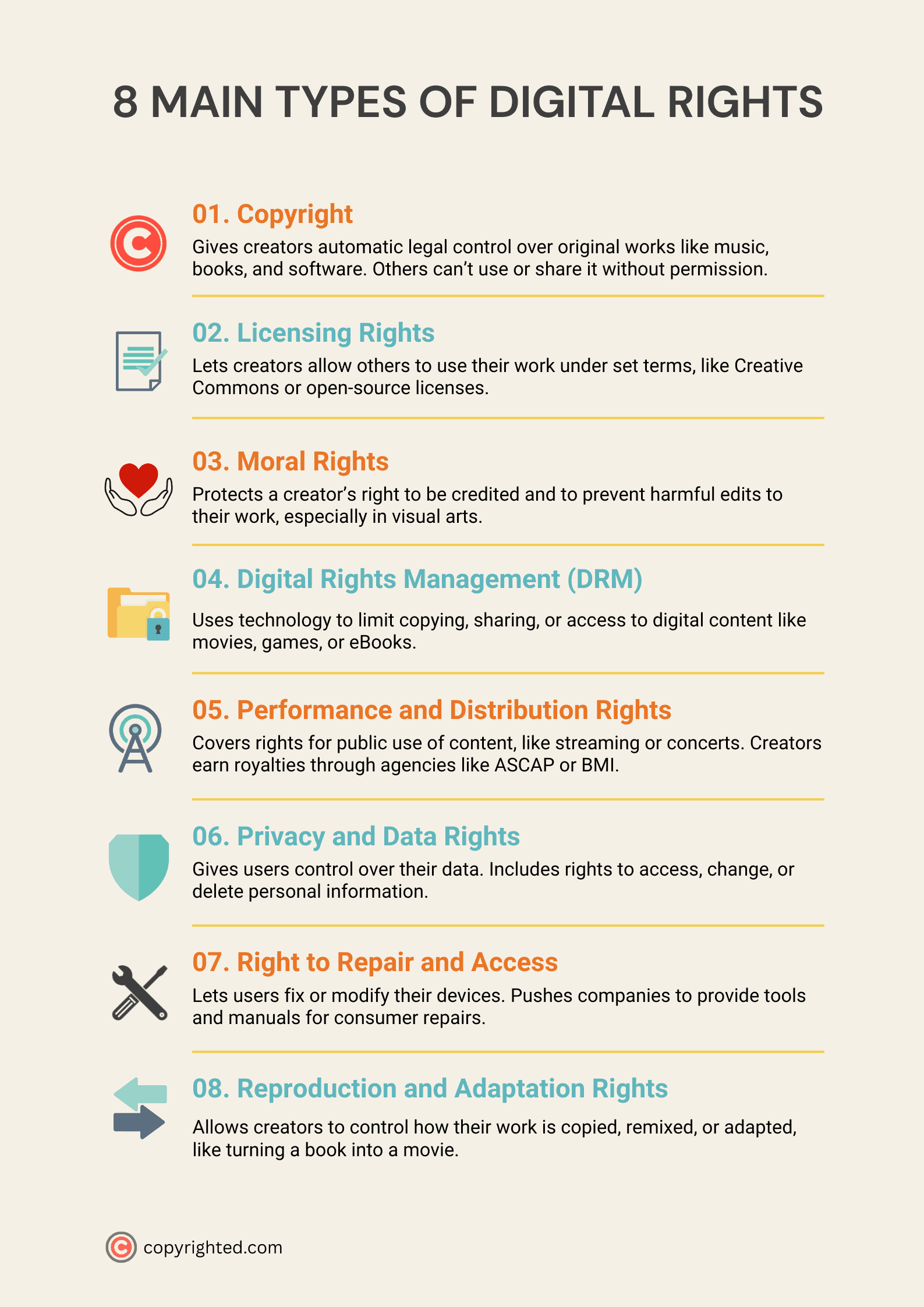
Copyright
Copyright gives creators legal control over their original work, covering music, videos, writing, software, and artwork. According to 17 U.S. Code § 102, copyright protection starts when the job is created and saved in a fixed form.
For example, when someone uploads a song or publishes a digital book, copyright laws stop others from copying or sharing it without permission. Posting a full movie online without approval is a copyright violation.
Licensing Rights
Licensing allows creators to permit others to use their work under certain conditions. This can be done through private agreements or public tools like Creative Commons licenses.
If credited, a photographer might allow free use of their photos. A developer might release code under an open-source license to allow others to use or improve it while retaining some rights, as licensing enables sharing work while maintaining legal control.
Moral Rights
Moral rights protect a creator’s link to their work. These usually include the right to be named as the creator (attribution) and the right to object to changes that damage the work’s meaning or reputation (integrity).
In countries like France, moral rights can’t be sold or waived, while in the U.S., they are limited and mainly apply to visual art under the Visual Artists Rights Act of 1990. If an artwork is changed in a way that harms the artist’s reputation, they may still have the right to speak out.
Digital Rights Management (DRM)
Digital Rights Management (DRM) refers to tools that control how digital content is used, commonly seen in music, movies, games, and eBooks. It can limit copying, block screen recording, or require an internet connection.
For instance, a rented movie may expire after 48 hours, or an eBook might not allow printing. While DRM protects content from misuse, the benefits of digital rights management also include encouraging fair compensation for creators and ensuring content integrity.
Performance and Distribution Rights
These rights cover how content is performed or shared with the public. They apply to live events, broadcasts, and online streaming.
The owner must usually be paid if a song is played on the radio or in a concert. In the U.S., organisations like ASCAP and BMI handle these payments for music creators, and streaming services also pay fees to use content legally.
Privacy and Data Rights
These rights give people control over the data collected online. Users can ask what data is collected and how it’s used and request changes or deletion, which are core features of the right to privacy.
The EU’s GDPR is one of the strongest data protection laws, granting users the right to access, correct, and erase their data. As more countries adopt similar rules, asking a platform to delete your data or opting out of tracking are examples of these rights in action.
Right to Repair and Access
This right lets users fix or modify their own devices and software. It’s an ongoing issue, especially with products like smartphones, laptops, and tractors that manufacturers lock.
Some companies block access to repair manuals or use software to prevent outside repairs. Laws like the New York Digital Fair Repair Act (2022) aim to change this by requiring manufacturers to provide repair tools and information.
Reproduction and Adaptation Rights
These rights let creators decide how their work is copied or changed. This includes remixes, translations, or turning books into films.
For example, a screenwriter needs the author’s permission to adapt a novel, and if a song is sampled in a new track, the original artist must approve it. Under 17 U.S. Code § 106, these rights belong to the creator unless officially transferred.
How These Rights Apply to Digital Media and Platforms
Digital rights apply directly to how we use websites and apps like YouTube, Spotify, TikTok, Netflix, and social media platforms. These services host and share content, but the rights we’ve discussed shape what users, creators, and platforms are allowed to do.
Content Sharing and Copyright
Uploading videos or music doesn’t remove copyright protection; the creator still owns the rights, but uploading often grants the platform permission to use the content. Using copyrighted material without permission can lead to takedown requests.
Licensing on Streaming Platforms
Streaming platforms use licensing agreements to show or play content legally. These licenses cover rights like distribution and performance, with creators paid through fees or royalties, and if a title disappears from a platform, the license has likely expired.
DRM in Practice
Digital Rights Management (DRM) is used to prevent copying, downloading, or recording protected content, with platforms like Netflix and Kindle applying DRM to limit how users interact with digital media. Circumventing DRM protections is illegal based on 17 U.S. Code § 1201.
User Privacy and Data Collection
Platforms collect data to personalize content and ads, and under the GDPR, users can inquire about the data collected, how it’s used, and request its deletion. Many platforms now provide privacy settings, encryption, and opt-out options to meet these rules.
Monetization and Moral Rights
When creators earn money from their content, they rely on platforms to protect their work and give proper credit. In countries with strong moral rights, altering or reposting content without attribution can lead to legal consequences.
Frequently Asked Questions
What are the rights of digital media?
Digital media rights include copyright, licensing, moral rights, privacy, and control over how digital content is used or shared online.
How is digital rights management (DRM) different from copyright?
Copyright is a legal right protecting creators’ work, while DRM is a technology used to enforce those rights by limiting how digital content is accessed or copied.
Are Creative Commons licenses considered digital rights?
Yes, Creative Commons licenses are a form of licensing that allow creators to grant specific usage rights while retaining legal control.
Can users own digital rights when buying online content?
When buying digital content, users usually purchase limited access or licenses—not full ownership—depending on the terms set by the platform.
Do all countries recognize the same digital rights?
Digital rights vary by country; some offer stronger protections than others, like the EU’s GDPR or France’s moral rights laws.